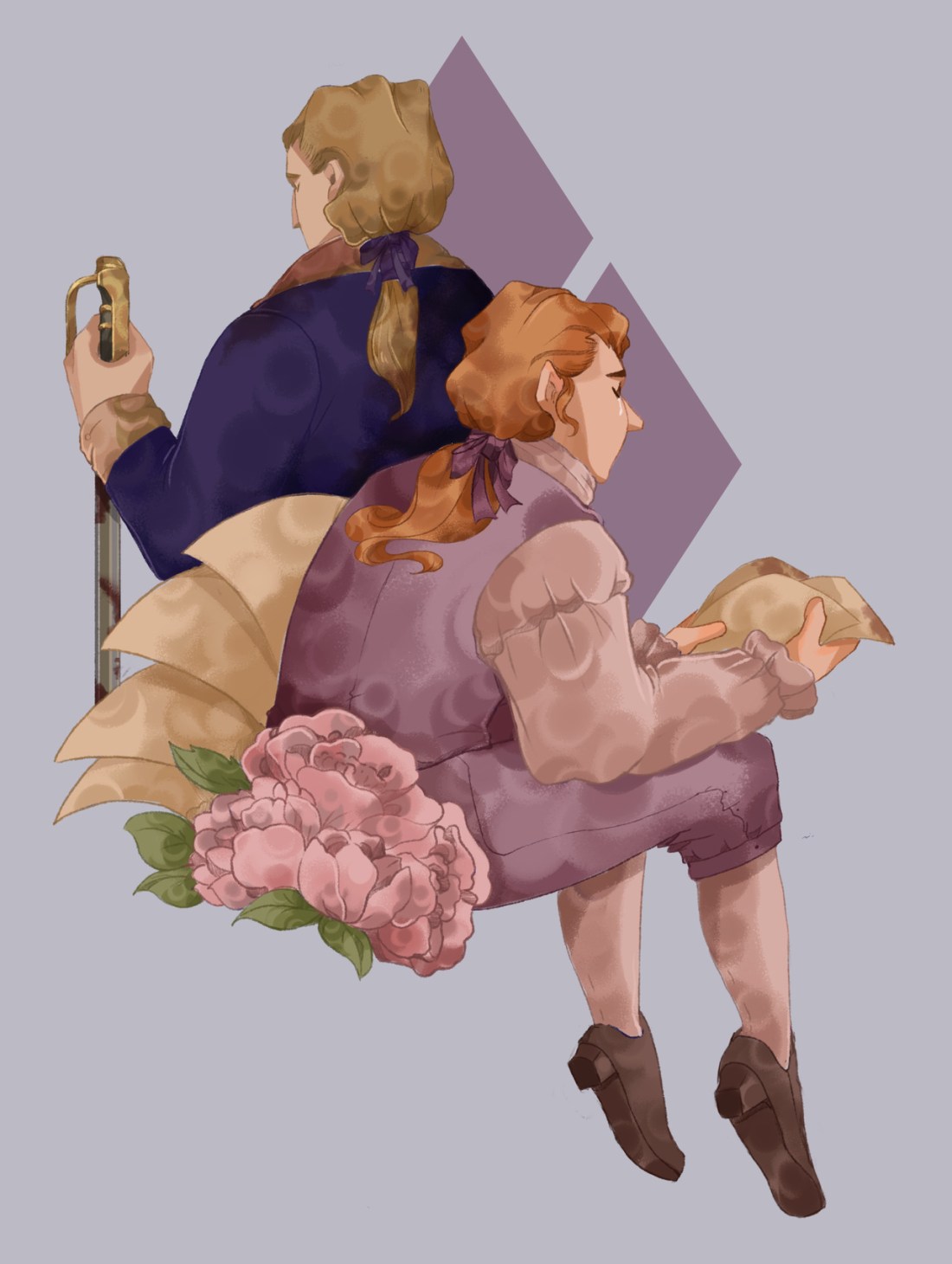
Ah, I love the drama between these two! Hamilton met Madison in 1782 when he went to Philadelphia as a delegate to the Continental Congress. They worked together trying (unsuccessfully) to strengthen the central government under the Articles of Confederation. Then in 1786 they teamed up again for the Annapolis Convention, which was the run-up to the Constitutional Convention in 1787. Their friendship reached it’s height in 1788, while they were working on the Federalist. They were constantly together, writing and plotting to get the Constitution ratified. This is the period when Hamilton’s issuing dinner invitations to Madison, people were writing to them as if they were one person, and, according to John Church Hamilton, they once played with a monkey climbing a tree in a neighbor’s yard (aka the Golden Days).
As late as 1789, Hamilton was still reaching out to Madison as a friend for advice as he began his work in the Treasury. On October 12, 1789, Hamilton wrote, “As I lost the opportunity of a personal communication May I ask of your
friendship to put to paper and send me your thoughts on such objects as
may have occurred to you for an addition to our revenue; and also as to
any modifications of the public debt which could be made consistent with
good faith the interest of the Public and of its Creditors?” By November 24, 1791, things seem to be taking a turn between them. Hamilton forwarded his Report on Manufactures and said he’d like to call on Madison to discuss it, but added, “It will not be disagreeable to me if after perusal you hand it over to Mr. Jefferson.”
The letter to read if you’d like a lengthy, thorough account of their relationship falling apart is Hamilton’s to Edward Carrington, dated May 26, 1792. After 1789, Hamilton reported, “repeated intimations were given to me that Mr. Madison, from a spirit of rivalship or some other cause had become personally unfriendly to me.” He goes on to detail their fights over the Report on Public Credit, and how Madison made insinuations that Hamilton was mismanaging public funds. “The whole manner of this transaction left no doubt in any ones mind that Mr. Madison was actuated by personal & political animosity.”
Madison and Jefferson were genuinely cruel when speaking about Hamilton at times in the 1790s. One letter in particular has always bothered me. Hamilton contracted Yellow Fever on September 5, 1793. On September 8, 1793, Jefferson reported to Madison, who had already returned to Virginia:
“Hamilton is ill of the fever as is said. He had two physicians out at
his house the night before last. His family think him in danger, &
he puts himself so by his excessive alarm. He had been miserable several
days before from a firm persuasion he should catch it. A man as timid
as he is on the water, as timid on horseback, as timid in sickness,
would be a phænomenon if the courage of which he has the reputation in
military occasions were genuine. His friends, who have not seen him,
suspect it is only an autumnal fever he has.”
Jefferson’s cruelty here is awful, but somewhat expected. What’s always gotten to me is that he thought Madison was a sympathetic ear to which to spew this vitriol.
They grew distant in the coming years. The last extant correspondence between them is from May 1801. Hamilton reported an account he’d received that Spain had transfered the Louisiana Territory to France. Madison responded with cool formality on May 26, 1801: “The Cession of Louisiana by Spain to the French Republic, referred to in
the letter, had been previously signified to this Department from
several sources, as an event believed to have taken place. Supposing you
might wish to repossess the letter from Mr. C I herein return it.”
Hamilton’s death in 1804 didn’t prompt any kind of emotional outpouring from Madison. Most of his mentions of Hamilton are very calculating and political. For example, he wrote to Noah Webster on October 12, 1804 to correct certain accounts of the constitutional convention that were arising “on the late occasion which so strongly excited the effusions of party & personal zeal for the fame of Genl. Hamilton.”
However, Madison does seem to have thawed towards Hamilton in his later years. Neither Jefferson or Madison tried to dismantle his financial system, mostly because doing so would have injured the American economy. Even Albert Gallatin, Jefferson’s Treasury Secretary, could find no flaw in Hamilton’s plan. After a thorough investigation of all the documents at Treasury, Gallatin reported to Jefferson that he had found, “the most perfect system ever formed–any change that should be made to it would injure it–Hamilton made no blunders–committed no frauds. He did nothing wrong.” (Or so he later reported to James A. Hamilton). The charter lapsed on the Bank of the United States not so much because Madison wanted to see it ended, but more because no one fought particularly hard to keep it. However, after the War of 1812 and before the end of his presidency, Madison had rechartered the bank. Madison was also instrumental in acquiring Hamilton’s military back-pay for Eliza and the children. This is likely the period where you found Madison speaking positively about Hamilton’s financial plan. His overall tone towards Hamilton became much more civil and respectful.
As an interesting side-note, when Alexander Hamilton, Jr. went to Europe to fight in the Napoleonic Wars, he sent a few letters to Madison reporting intelligence he’d gathered on his travels. (See, for example, Alexander Hamilton to James Madison, June 12, 1811.) In 1831, they exchanged letters again, this time because Alex Hamilton wanted to report James Monroe’s fast failing health to Madison. Madison responded a week after Monroe’s passing: “With my thanks for the kind attention manifested by your letter, I pray you to accept assurances of my friendly esteem, and my good wishes.”
Over time, reading their letters and learning about what they were like, I’ve developed my own idea of how they would have sounded, pretty independent from any of the (amazing) actors who have played them.
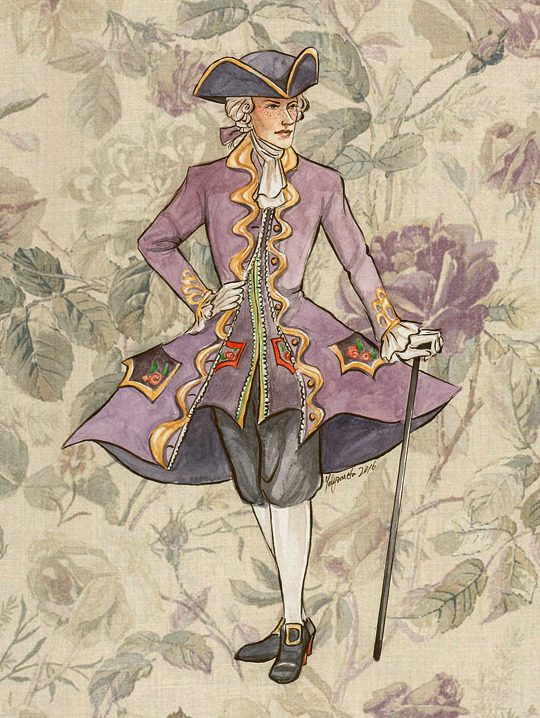
Hamilton was a talker (as we all now know :)), but many people also enjoyed hearing him speak. He was often soft spoken, and I imagine his voice being deep and soothing, almost hypnotic, with just the slightest hint of a foreign accent. Eliza, I imagine, had a similarly soft, gentle manner of speaking, but also possessed a rich voice and a musical, contagious sort of laugh.
“On the first days of your Arrival at Albany I dare say you had Nothing to do with Any Body’s letters. But I will now Become the Bolder in interrupting your Amorous Occupations as exclusive of other Motives the importance of the Matters I have to Mention may Countenance your indulging your dear self with some Minutes Respite.”
“I went out with General Hamilton on Saturday the 21st, and stayed till Sunday evening. There was a furious and dreadful storm on Saturday night. It blew almost a hurricane. His house stands high and was very much exposed, and I am certain that in the second story, where I slept, it rocked like a cradle. He never appeared before so friendly and amiable. I was alone, and he treated me with a minute attention that I did not suppose he knew how to bestow. His manners were also very delicate and chaste. His daughter, who is nineteen years old, has a very uncommon simplicity and modesty of deportment, and he appeared in his domestic state the plain, modest, and affectionate father and husband.”
— Judge William Kent to his Wife- April 26, 1804 (via Memoirs and Letters of James Kent, pg 143)
“[For Hamilton] to call Burr ‘Catiline’ or ‘Savius’ was more than name-calling; these were unabashed verbal ‘cuts’ at his character. The two Roman generals were depraved men, their careers stained by unspeakable acts of treason, murder, incest, and sodomy…Savius, Catiline, and Burr all shared the same personal and sexual vices, according to Hamilton. In one of his harshest rebukes, Hamilton wrote in a letter to John Rutledge, Jr., in 1801, calling Burr a ‘dangerous man’, ‘profligate,’ ‘with the cunning of Catiline,’ who was devoid of integrity and motivated by inordinate ambition. Like his Roman predecessor, Burr was ‘the haughtiest of men,’ aiming at nothing less than to establish ‘Supreme power in his own person.’ One of the most devastating insults contained in this letter was Hamilton’s accusation that Burr’s Catalinian cunning, like that of Savius, was based on his sexual power in ‘courting the young.’ This reference to Burr’s power over young men would prove to be a recurring refrain. More importantly, labeling Burr a bisexual seducer made his hypermasculinity dangerous in a distinctive sense: he had the power not only to captivate women, but he could entice (secure the personal devotion of) young, impressionable, vulnerable men.”
—
Nancy Isenburg, The ‘Little Emperor’: Aaron Burr, Dandyism, and the Sexual Politics of Treason
“Kit took occasion to tell me that [Alexander] Hamilton (who cast some liquorish looks at his cara sposa, the day we were at Breck’s) appears to him very trifling in his conversation with ladies and that his wife said she did not like him at all. He was evidently satisfied, with this intimation.”
—
Harrison Gray Otis
(liquorish=lustful; cara sposa=beloved wife)
I love Otis’s obvious amusement with the fact that Kent is pleased his wife didn’t like Hamilton. XD A little insecure, eh Kent?
Also, Hamilton staring lustfully at other men’s wives.


 Daintyfire