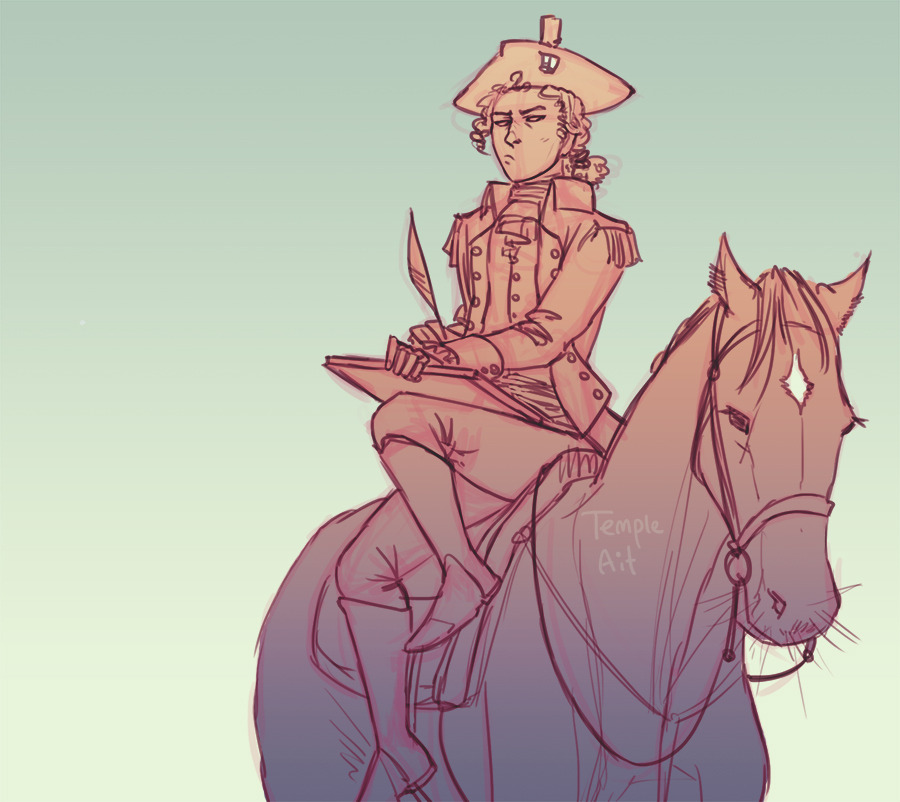
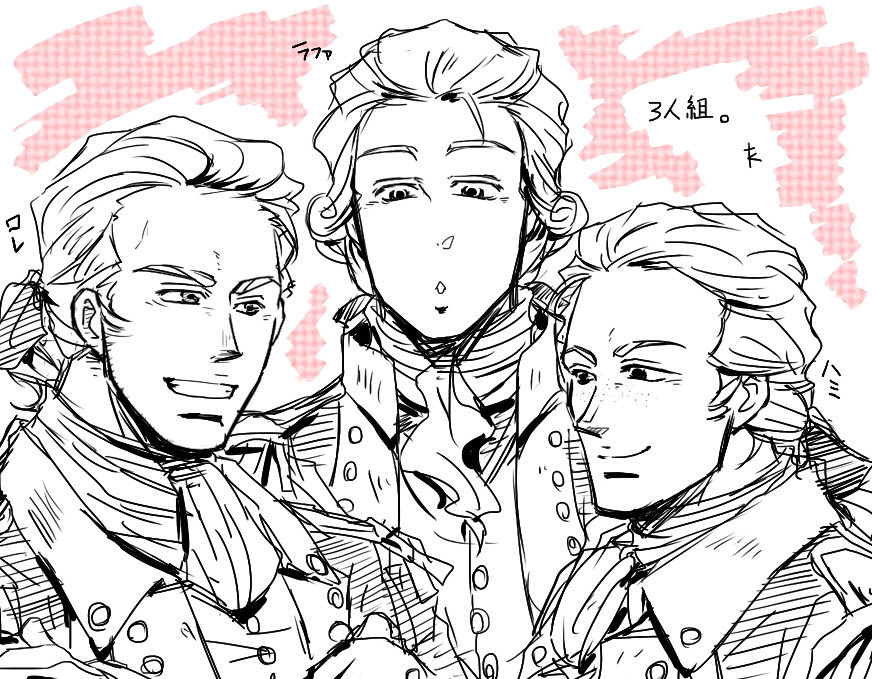
@allexanderlaurens gets Angery at the idea of a) horses, and b) Chernow claiming that Hamilton wrote while on horseback, so of course i had to draw it :3
@allexanderlaurens gets Angery at the idea of a) horses, and b) Chernow claiming that Hamilton wrote while on horseback, so of course i had to draw it :3
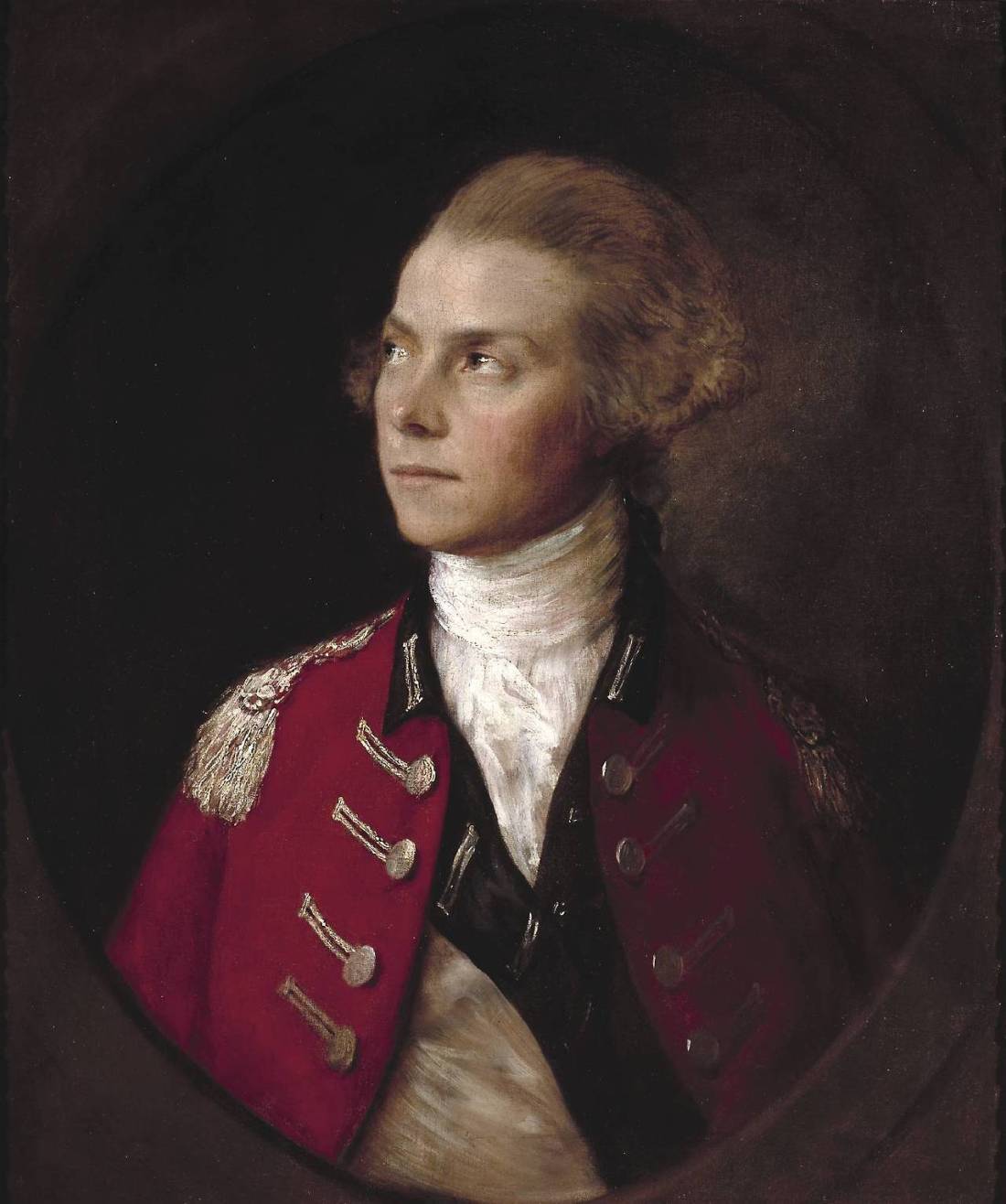
Circa 1770: An officer of the 16th Queen’s Light Dragoons, possibly Banastre Tarleton when he was younger.
Both Elizabeth and Alexander wrote to Peggy soon after their marriage, in the same letter – Elizabeth first, and then Alexander wrote a postscriptum that is longer than the letter itself:
January 21st, 1781
As to me I am the happiest of Women. My dear Hamilton is fonder of me every day. Get married I charge you and give this advice to your friend. There is no possible felicity but in that state imagined me my Sister. I was much in want of it.
Because your sister has the talent of growing more amiable every day, or because I am a fanatic in love, or both—or if you prefer another interpretation, because I have address enough to be a good dissembler, she fancies herself the happiest woman in the world, and would need persuade all her friends to embark with her in the matrimonial voyage. But I pray you do not let her advice have so much influence as to make you matrimony-mad. ’Tis a very good thing when their stars unite two people who are fit for each other, who have souls capable of relishing the sweets of friendship, and sensibilities. The conclusion of the sentence
would carry me too far; I trustthe restto your fancy. But its a dog of life when two dissonant tempers meet, and ’tis ten to one but this is the case. When therefore I join her in advising you to marry, I add be cautious in the choice. Get a man of sense, not ugly enough to be pointed at—with some good-nature—a few grains of feeling—a little taste—a little imagination—and above all a good deal of decision to keep you in order; for that I foresee will be no easy task. If you can find one with all these qualities, willing to marry you, marry him as soon as you please.
I must tell you in confidence that I think I have been very fortunate.Lines are crossed out according the the commentary at The Founders – they were in the letter but then were crossed out by Hamilton or someone else, probably for naughtyness.
Eliza’s letter shows her feelings – even more precious because we have relatively few examples of them, with her letters to Hamilton gone. In addition to all the feels, personally, I hope she’s also referring to her sex life. Hamilton seems to do so, especially in the crossed-out bits.
Hamilton’s letter is expressive as usual, but it is written in a simpler style that his other letters to Peggy, which shows that they are getting closer. Hamilton tends to get clever and witty with people he tries to impress (see: letters to Kitty Livingston, the first letter to Peggy), but with those he considers close and dear, he is much more direct and doesn’t try to disguise his feelings in witticisms. It is clear in his letters to Eliza and to Laurens. (He uses more quips in his letters to Angelica, but so does she, it’s their thing; although when I’m in a mood I see it as a proof that they weren’t as close and straight male historians make them to be.) Hamilton and Peggy seemed to be pretty close; and Hamilton was with her for weeks when she was dying.
This is also yet another chapter in the ongoing saga of “getting Peggy married”; if you remember, Hamilton promised to write a play for her to learn how to ensnare a husband. It seems that the family was worried because apparently she was a bit of a flirt and a bit of a bitch. She gave them all a finger by eloping with a guy 6 years younger. But in this letter, newly domesticated Hamilton (who will write to other people at the same time how he now wants nothing more but to enjoy the pleasures of married life) seems to share his new understanding of the requirements of happy marriage, and changes his tune.
In short I love this, this family is adorable, I’m gonna cry now.
The fondness that la Marquise discovers for her children, is very amiable; and the more remarkable in a country where the least trait of such a disposition is scarce known. She seems to adore them, and to live but in them. She has two that were presented to us; they both speak English, and sing it; the Marquis appeared very fond of them likewise. He is apparently a man of great modesty, and delicacy of manners.
All dined at the Marquis de la Fayette. There was a considerable company, mostly composed of Americans. We saw two of the Marquis’s children; he has three; but the other is out at nurse at Versailles. His son is called George Washington: about 4 years old, a very pretty child: the Legislature of the State of Connecticut have lately made his father and him, citizens of that State.
The Marquis’s youngest daughter is named Virginia. Madame is a very agreeable woman, and has a pleasing countenance: She is extremely fond of her husband and children, which is a most uncommon circumstance: especially as when they were married, neither of them was more than 12 years old: She told my father that Mrs. Jay, did not like the french Ladies. “Ni moi, non plus.” And that if Monsr. le Marquis goes to America again, she will go with him.
John Quincy Adams’s diary, 21st February 1785
‘She is extremely fond of her husband and children, which is a most uncommon circumstance’ good to know he shared the same opinion as his mother –
‘I should always take pleasure in [Adrienne’s] company. She is a good and amiable Lady, exceedingly fond of her Children and attentive to their education; passionatly attached to her Husband!!! A French Lady and fond of her Husband!!!’
– Abigail Adams to Mary Cranch, 15 April 1785
(via iafayettes)
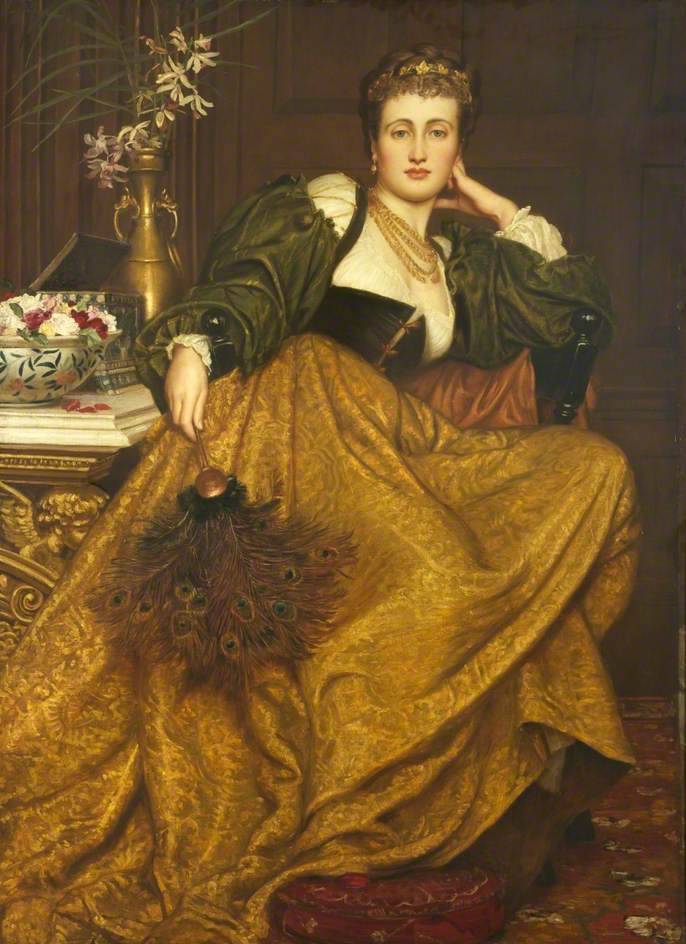
 Daintyfire